Galápagos coffee: a highland coffee grown close to the sea
Almost anywhere else on the equator, coffee grown this close to the sea would be ordinary. Here it isn’t. The reason comes from the ocean.
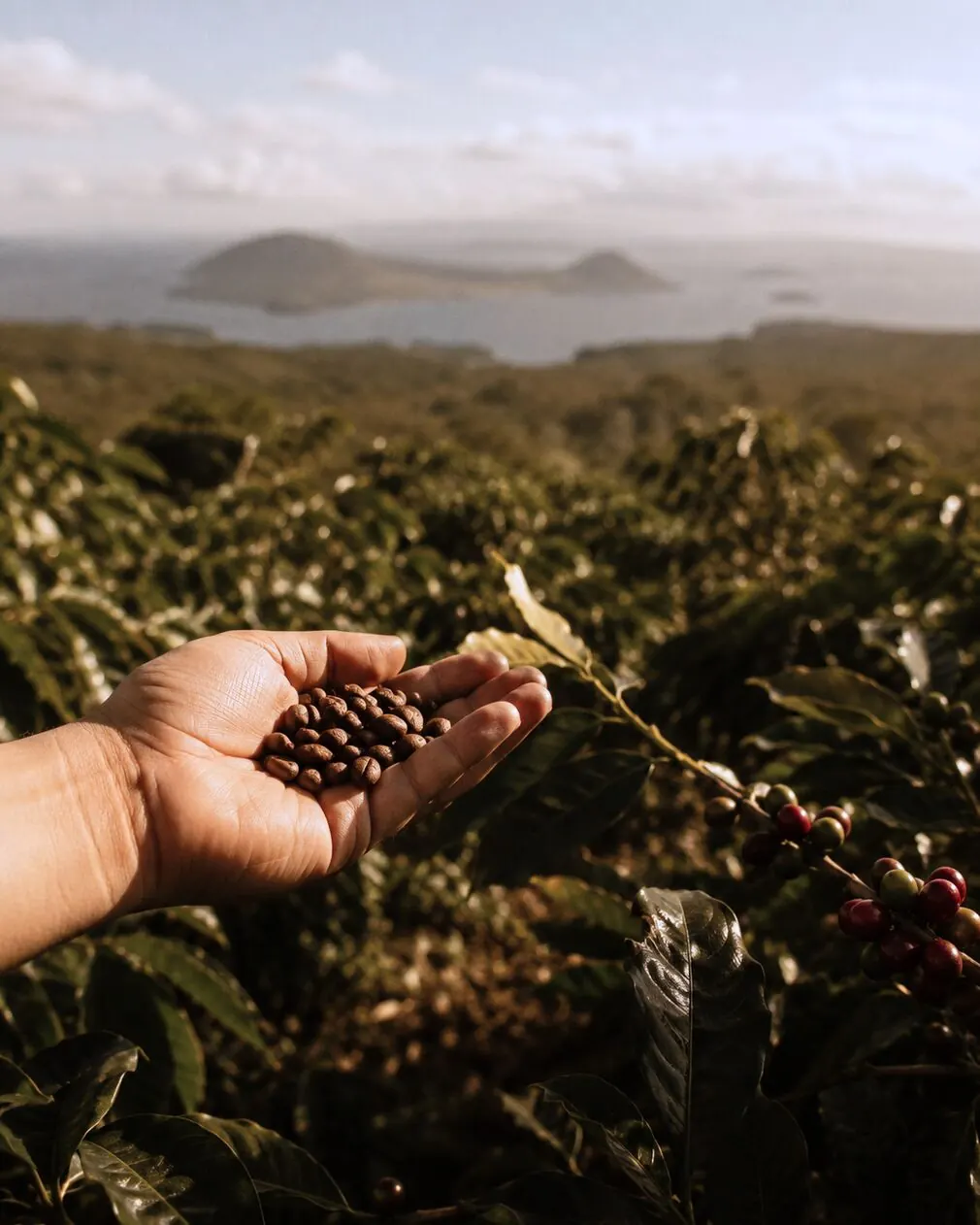
Tell a roaster in Colombia or Ethiopia that Galápagos grows specialty coffee just a few hundred meters above sea level, and you will probably get a raised eyebrow. Near the equator, good coffee usually grows high up, somewhere between 1,200 and 2,000 meters, where the air is cool and the cherries take their time. At the altitude of most farms in the islands, almost any other coffee in the world would taste flat.
Something different happens here. And the explanation is not in the land. It is in the sea.
An ocean that cools the islands
Galápagos sits right on the equator, yet it doesn’t have the heavy heat you might expect. The reason is the Humboldt Current, which flows up from the south of the continent carrying cold water all the way to the archipelago. That cold water cools the air, and the cool air changes everything else.
From roughly June to November comes the garúa season. Low clouds settle over the islands. On the coast it barely rains, but in the highlands a fine, steady drizzle soaks everything. Drive up into the Santa Cruz highlands during those months and you notice right away: you need a jacket, the road fills with mist and the forest drips.
For a coffee tree, those conditions look a lot like a much higher mountain. Mild temperatures, humidity, filtered sun. The cherries take longer to ripen, and in that extra time they build up sugars and aromas. It is the same reason farmers on the mainland look for altitude, except that here the ocean does the work.
In Galápagos, what the mountain does elsewhere, the sea does here.
Volcanic soil
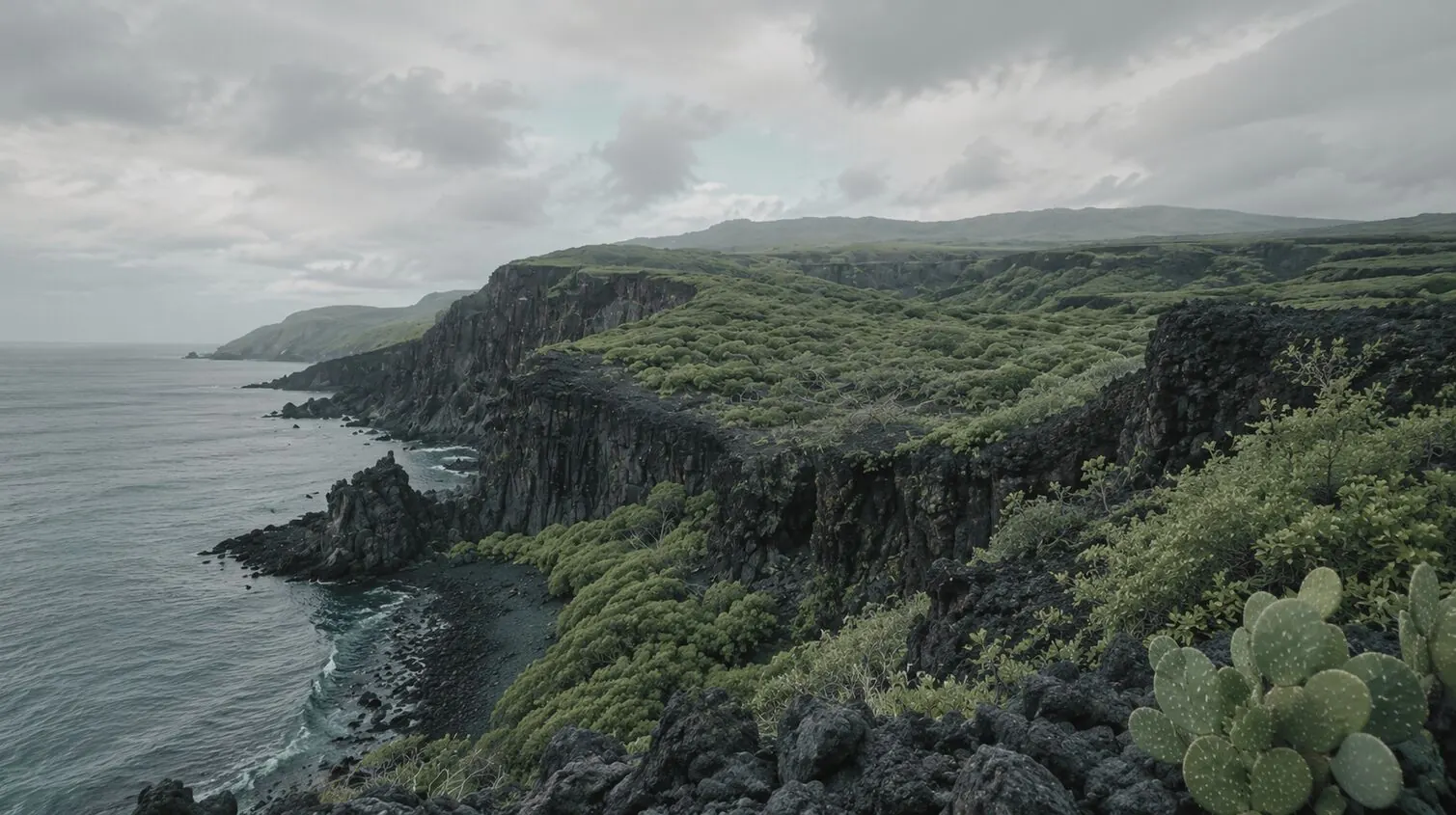
The other half of the story is underfoot. The islands are volcanoes, some still active, and the highland soil is ash and volcanic rock that has been breaking down for thousands of years. It is dark, porous and rich in minerals. It drains well and feeds the plants without much help.
On Santa Cruz, the humid highlands were originally a Scalesia forest, an endemic tree from the daisy family found nowhere else on earth. Much of that land is farmed today, and coffee grows among pastures, shade trees and what remains of the old forest.
A story from the 19th century
Coffee is not new to the islands. It arrived in the second half of the 19th century on San Cristóbal, with Manuel J. Cobos, who built a plantation there called El Progreso. For a few years, Galápagos coffee was shipped to the mainland and abroad.
It is not a pretty story. The hacienda ran on workers brought from the mainland, many of them convicts, under brutal conditions. In 1904 they rebelled and Cobos was killed. Production faded, and for decades island coffee was all but forgotten.
It came back slowly, through families who began replanting small farms in the highlands of San Cristóbal and Santa Cruz. Today there are a handful of growers in the archipelago, nearly all of them small, and every one works under strict rules. You cannot bring just any plant, seed or supply into Galápagos, and everything that arrives goes through biosecurity checks to protect native species.
Why there is so little of it
Galápagos coffee is scarce, and not as a marketing idea. Farms are small, labor is expensive, almost everything needed arrives by boat and farmland is limited because most of the islands are National Park. On top of that, many farms, ours included, pick by hand and only take ripe cherries, which stretches out the harvest and keeps volumes low.
Rancho Bravo, the Jácome family farm in the Santa Cruz highlands, produces around 160 kilos of coffee a month. That is not much. Enough to serve at the bar and fill the Blue Iguana Coffee bags, and that’s it.
What it tastes like
Every farm is different, but island coffee tends to share a few traits: it is sweet, with soft acidity and a gentle body. You find chocolate, nuts, caramel and, depending on the process, some red fruit. It is not a loud coffee. It is the kind that gets better as the cup cools.
Ours goes through an anaerobic fermentation, meaning without oxygen, which brings out the fruit. The light medium roast shows chocolate, almond and cranberry. The medium dark leans toward cacao, dark cherry and caramel.
How to taste it
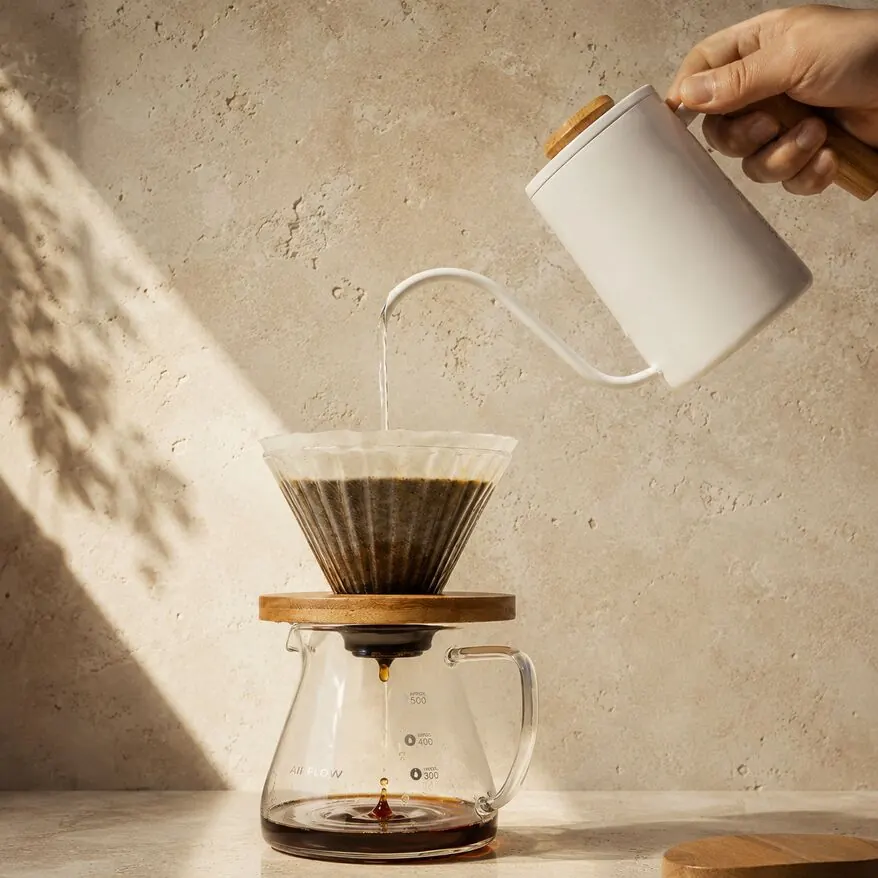
If you want to really get to know a coffee, order it as a filter. A V60 shows the detail, and a Chemex makes an even cleaner cup. If you like more body, an espresso or a flat white brings out the chocolate side. We also have a guide to brewing filter coffee at home, in case you take a bag with you.
And if you have a free morning on Santa Cruz, it is worth going up to the highlands to see where it comes from. Garúa or not, the cup makes a lot more sense once you have stood on that soil.
If you are in Puerto Ayora, the farm’s coffee is waiting on Avenida Charles Darwin.
Find us